
On the Rise
FROM
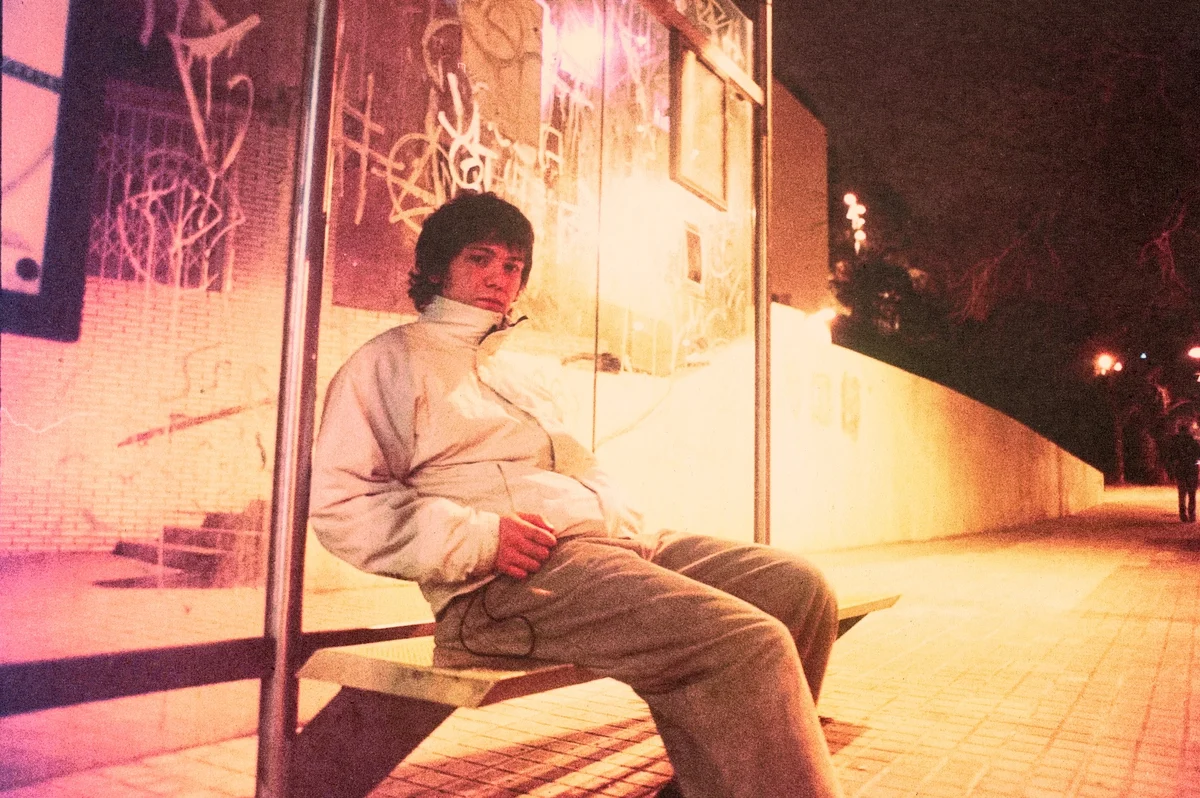
Finding unlikely inspiration in his rainy little town in the Asturias region of northern Spain, Fernando Romero started the experimental project FROM to ‘deep-dig’ into analogue recording techniques, tape delay, and a breadth of dub influences.
Fernando Romero’s first band formed when he was 11 and was called “Las mosquitas muertas” (The dead mosquitoes).
The name recalls the demonym “moscones,” used to refer to the people from a small town in the north of Asturias (Spain) called Grao. “I started music lessons really young, as a little kid, around six or so, doing piano lessons.” You’d think that a young creative person would be frustrated by the limitations a place like Grao could offer, but Romero always found ways to interact though music even in this context, engaging in a free radio from the area called Radio Cuca (Cockroach radio), which would form the first stimuli for his current interest in online radio and European underground music.
As a teenager, he quickly discovered Mac DeMarco and was influenced to record and produce his own songs, releasing his first record in 2019 and starting his first tour just after the pandemic. At this point he also began programming gigs in his hometown of Oviedo; “it helped me meet quite a lot of people and get involved not just in playing, but in being part of a scene from very early on,” he tells me.
Soon after this, he released his sophomore record Insecto (2022), which served as “a representation of a very particular moment in my life.” The record does a good job of conceptually reflecting Romero’s surroundings in a rural county such as Asturias, where boredom, old men, rainy days, and slow buses from one small city to another are warped into a weird Groundhog Day feeling. “It’s Asturias core,” he affirms.
In 2022 he moved to Tilburg, in the Netherlands, “to study a degree in music [jazz piano] and see what was going on in other places.” At this point he also started up a label called Cimatario Fuexu Recordings, “motivated by the need of having the means of production in my own hands. Mostly it was about copying other cool stuff that other labels were doing, and about staying active too. I was also making mixtapes and other unserious things with my buddy Ulises. We put them out under pseudonyms and that kind of thing. Eventually we ended up releasing other people’s music too.”
Two years later, in 2024, Romero released his third album, titled Modelo para armar (A model kit), named after the Argentinian author Julio Cortázar’s novel. “I recorded that one at home and finished it in Madrid. Then I did a pretty long tour of Spain with my band because we got a national grant. After that I toured around Europe on my own. That was my first encounter with playing solo, which is the format I work in now. It was a very important record – above all because it got me out of the house a bit.”

The shift from playing with a full band to performing solo was one of the first sparks for his new record, Furar Hondo (Deep Digging), released this year. “I used to bring a sort of Walkman and would use samples from tapes, but it’s a real drag carrying so much around, so I’ve simplified it a bit. I keep changing things, but the essentials are a drum machine, a sampler and a mixing desk, effects and so on. It’s all played live. I mean, the live set now feels more like a dub set since there’s also a lot of delay.”
Dub is another of the main influences that experiencing the European underground scene brought to Romero’s career. “I started listening to dub because some friends told me that I’d love it given the things I liked, and honestly I’d listened to it very little. Then I kept finding labels I liked that were always tagged as dub on Bandcamp and thought, what is this? So I started with the first things you listen to in dub, like Lee "Scratch" Perry or Scientist.”
“I also realised that many of the records I loved were heavily influenced by dub. One of my favourite albums is Lifetones’ For a Reason (1983), and then there’s the whole Factory Records discography, or John Peel, or The Clash. They’re all steeped in dub. I like reggae, and I like overrock too, but above all what I love is the feel of it: the analogue recording, the tape delay, it suddenly connected with things I was already doing, things that had already been discovered and done.”
Furar Hondo is Romero’s most ambitious record yet, shaped over four years of living, working, and studying in Tilburg. “This record did take a lot of work, and it was the result of my experience living and playing abroad, going to lots of gigs and being active in a scene,” he says. Lyrically, this album is his most violent, describing being killed and getting beat up by an angry man at a village party in Asturias. At the same time, the record is deeply influenced by ’60s pop music, with acts such as The Beach Boys, The Kinks, and The Beatles as a driving force.
“I enjoy making songs. I like thinking of the format, the melodies… What I wanted for this record was to mix a proper song-song with a more psychedelic/dub sound with a very prominent bass line.” Furar Hondo feels in some ways like a self-discovery record, a means for Romero to deep-dig into his own musical impulses, continuing that strange world he began creating at age 19, and making it more and more layered.
Sign up to Best Fit's Substack for regular dispatches from the world of pop culture