

Squid, Shabaka and Cobrah open their record collections and Bristol plays along
Lead photo by Fern Archiive
One-day festival Simple Things finds its strengths through fine curation and an audience that never flinches at difficult music, writes Cal Cashin.
Bristol is a better city than most for embracing the strange, the out-there, and the bold. In fact, in the pantheon of British cities it might just be the best.
To get to Bristol this weekend, you had to navigate the year’s thickest greyest fog. We’re talking can’t-count-your-fingers fog. A real pea souper. The rolling hills that surround the South West’s biggest cities were blanketed by mist, covered by hazy brumes. Piercing this on the GWR stopping service was as close as you can get to riding the Stalker train that takes you to the zone – but, should you be heading towards Bristol’s Simple Things festival, this obscured journey is as normal as things get.
Simple Things is something of an institution in the city, and compared to other festivals of its type, it oozes character. The main stages take over the Beacon, Bristol’s premier multi-venue arts centre, while other shows are homed by indie spots DIY haven Strange Brew, or disused police station The Island, or, perhaps most excitingly, the abandoned department-cum-skate park Shredenhams. The lineup welcomes a broad church, and treats everything with the same reverence – big avant-garde names rub shoulders with hyperpop disruptors, while experimental rock bands in all shapes and sizes colour in the gaps.
This year’s Simple Things has a novel twist. As well as playing main stage sets themselves, post-rock marauders Squid, saxophone supremo Shabaka, and spiky Swedish electropop gorgon Cobrah have guest curated a huge part of the programme – alongside thinking man’s YBA Jeremy Deller. It’s great to see your favourite band – but to see your favourite band, preceded by your favourite band’s favourite bands: there’s something special about that.
Squid’s deftly-curated stage is a highlight that leaps off the poster. A band geographically scattered across the South of England, Squid have roots (tentacles?) in Bristol – two members reside here, and another hails from here – and their programme for The Island reflects the genre-fluid avant-rock monster they all collectively marshall. “It reflects how we go about our music,” guitarist Louis Borlase explains. “We’re not cohesive in our music: it’s a splurge of each member’s own interests and expressions. We wanted to reflect that, rather than just say, do our version of the ambient tent at Glastonbury.”
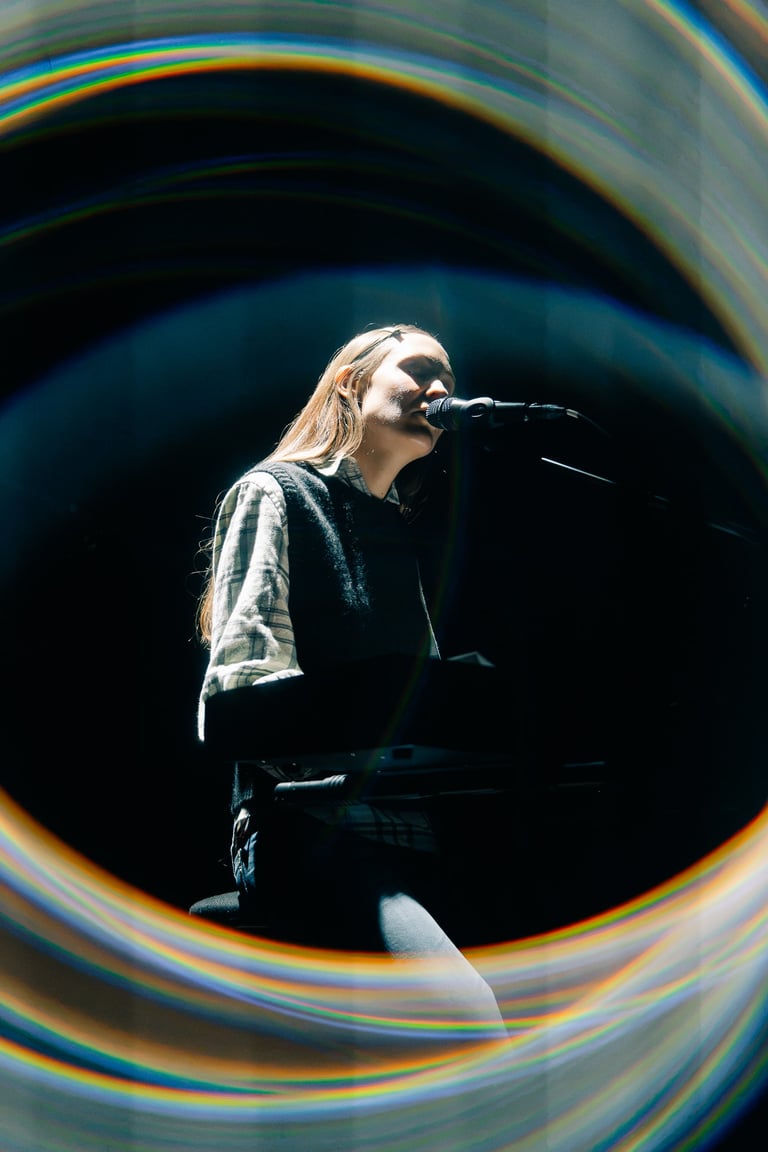
But before we get that far, we need to catch the festival’s curtain-raiser – at a one-day festival, time is of the essence, and the programme starts incredibly strong. Bristol underground supergroup DIALS pull psychedelic R&B earworms out of ultra-hazy soundscapes – one foot in the city’s trip hop past, one foot in its experimental present. Poet Eldon Somers and harpist Bethany trade vocal blows atop swampy, dusty beats, while multi-instrumentalist William Yates (aka Memotone) replies with freewheeling solos for synth, guitar, and clarinet.
Copenhagen alt-pop auteur Fine taps into a similar energy, as she immediately follows it with a set that draws heavily from recent second album Jazz Dreams. Fine’s songs sound like discovered jazz standards filtered through a miasma of echoey synth lines and organic-sounding string drones, not unlike Bristol’s own Tara Clerkin Trio, and her voice is magnetic. Even though the crowd is absolutely at capacity, you could hear a floorboard creak during the Danish producer’s quieter bridges.
Caroline complete an early-afternoon trio of smash-hit sets. The London octet are embraced by a city that shares their “cut it up and stitch it back together again” approach to rock music; after all, this is Britain’s de facto post-rock capital. During “Coldplay Cover” – a track that sees the band split into two four-pieces that play two acoustic songs into one microphone each – the crowd watch on mouth agape as the band turn a pair of sketches into one rich oil painting in real time.
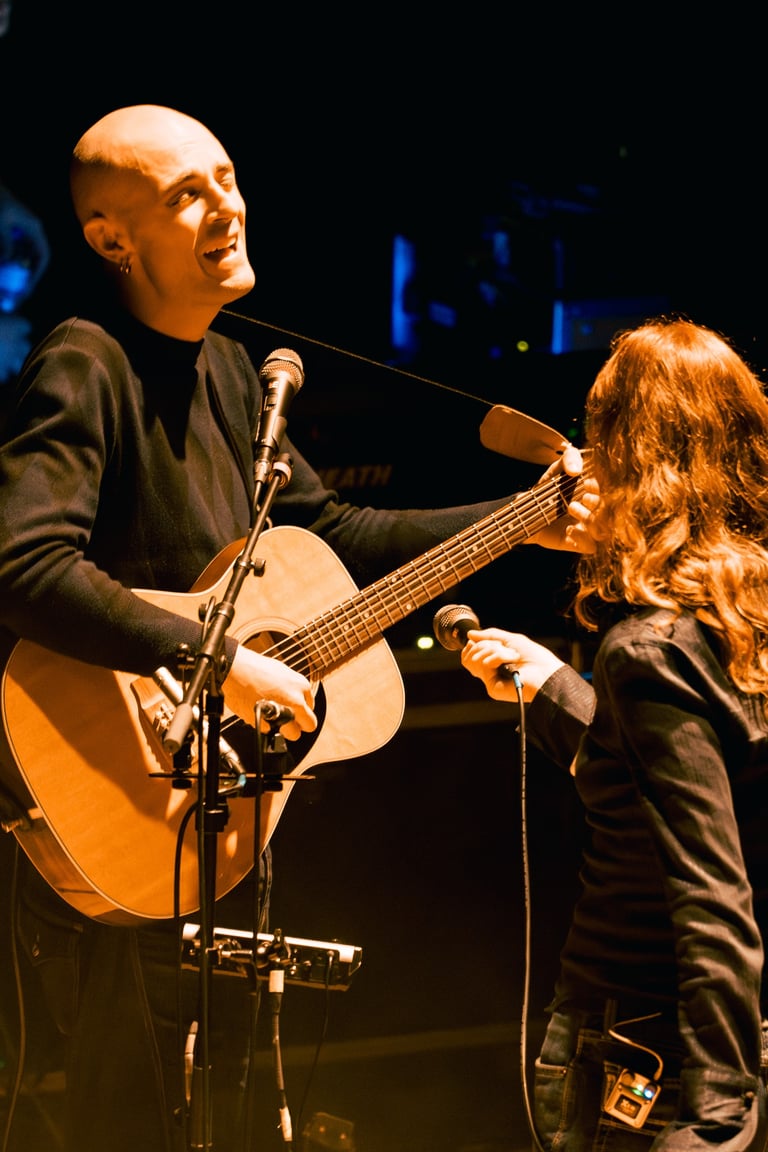
As Caroline lurch into a particularly noisy version of “Total Euphoria”, things are beginning simultaneously at Squid’s takeover of The Island – fortunately, we have eyes there, in the form of the band’s guitarist Louis Borlase and synth warlord Arthur Leadbetter, our guides for the afternoon. The band’s other guitarist Anton Pearson opens proceedings with his ambient solo project, performing cuts from this year’s Driving Through Belgium. “You had to be there,” Borlase says. “Everything felt temporary. It was testament to what Anton is like as a person: really measured, he takes his time.”
“We’ve all obviously known each other so long,” Leadbetter continues, “but we all met at uni. Anton used to do these ambient sets with his guitar. To see him up there, with three amps, playing to a crowd of 200 people was so special.”
Elsewhere, the band’s programme features an array of curiosities from the European underground. Borlase tells me, “it’s a big responsibility. You have this massive bearing on everyone who comes to see the music – we [took curating the stage] very seriously.” Following Pearson’s solo set are Bristol sprechgesang disruptors Minor Conflict and Berlin avant-rock outliers 13 Year Cicada (“they opened for us in Berlin – one of the best shows ever!”). After a joyfully discordant set from Glasgow electro-punks Comfort (“high up the billing on a big stage, and they deserve it so much”), everyone in the Squid squad scurries down Nelson Street for their biggest almost-hometown show to date in the Beacon’s main hall.
A quick stop in at Shredenhams allows us a booster shot of Moor Mother’s quantum futurist poetry scattered atop post-industrial blastscapes and BIG|BRAVE’s swelling, tactile drone metal before Squid swan onto the festival’s main stage.
By their own admission, there’s no time for “head-scratchers” as the quintet thunder through a set of boundless psychedelic free-rock. Fans favourites “Narrator” and “Pamphlets” catch drummer Ollie Judge belting out each lyric in anguish behind the kit, while throughout “GSK” and “Undergrowth” each member is mandated to pick up a piece of woodblock or cowbell percussion in service of phat polyrhythmic grooves.
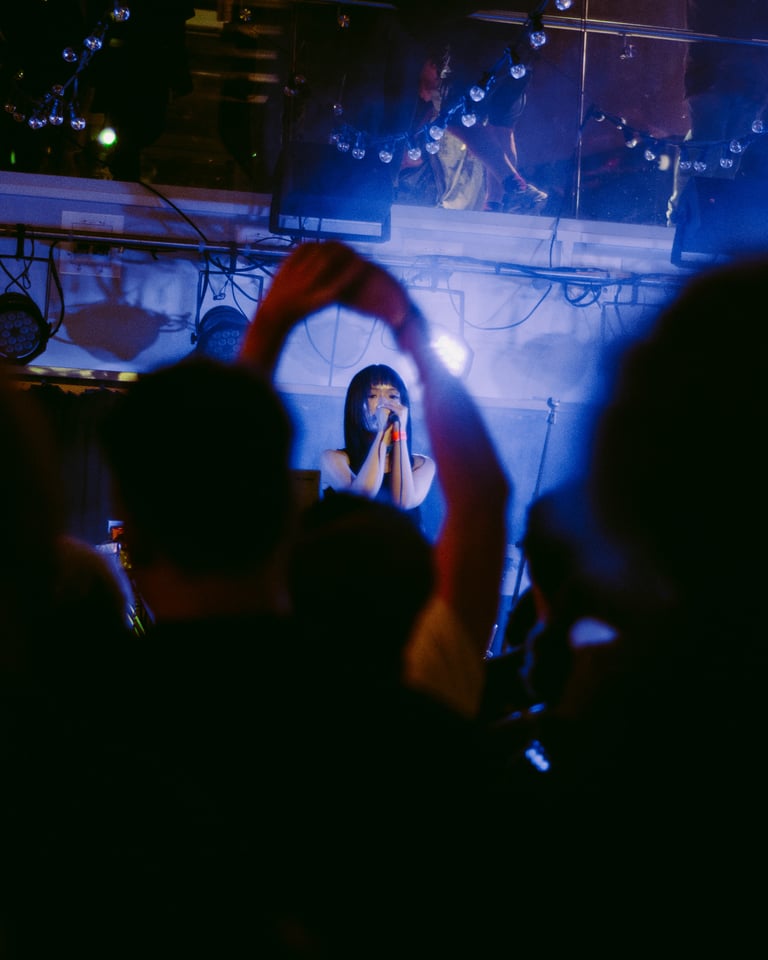
A pair of new songs, too, sprawl out the ether. Atmospheric cuts “Nitrates” and “Cyndi” catch the art-punks exploring whole worlds of luscious synthesiser textures, while the baying crowd gives them full trust. At a festival they have part-curated, Bristol’s adopted sons are in danger of stealing the show… but as the last of the feedback wall at the end of “Pamphlets” subsides, the night is still young.
Mykki Blanco lets his punk rock id run wild at “the Bridgehouse”, a makeshift stage in the foyer of the Beacon, before Mancunian firestarters SILVERWINGKILLER follow him, and find the sweet spot between The Fall and electroclash.
RIP Magic, meanwhile, wobble through their debut album 1,2,3 with brilliant psychedelic glee, not once making eye contact with the crowd from beneath their hoods and snapbacks. They skew Massive Attack’s trip hop with murky Nine Inch Nails floorfillers, before making way for the equally mysterious Chanel Beads. The violin-assisted cloud-rock upstarts from New York tap into a similar niche, but benefit from Lavers’ emo-as-hell vocals and a gloriously echoey effects-laden acoustic guitar cutting sublimely through the noise. Both these artists are at their best when things get hazy and fuzzy – when their tilted takes on indie rock enters the twilight zone.
Cobrah on the main stage, meanwhile, keeps things remarkably simple. There is no fuzz or reverb here. Her masked DJ has an arsenal of leathery techno-pop beats, and she has a voice like a freight train and writhing stage persona to match. 30-foot body horror visuals complement her twitching, convulsing stage performances, as she monsters underground hits “Hush” and “Excusez Moi” – before French producer Coucou Chloe (one of Cobrah’s picks for the lineup) joins her for a scintillating version of “Wizz”.
Berlin-based Texan Europop star Alex Wilcox keeps the same manic energy for a set in the foyer that is one part Devo, one part Mika, and two parts John Maus, before The Avalanches close out proceedings with a headline set for the ages.
Legendary Aussie plunderphonics whizkids, they might be approaching their thirtieth anniversary, but The Avalanches still sound like the future. Hyper-real visuals for each track, they look like it, too, as the duo bop behind the decks. Crowd-pleasers “Frontier Psychiatrist” and “Since I Left You” go down a treat, but so are all the cuts from new record No Bad Memories – they might be from the complete other side of the world, but if one city were to get and truly love this band, it would be this one.
Although Bristol boasts a fantastic scene of its own – post-rock, improv, and experimental music of any kind especially thrive here – which does not feature heavily on Simple Things’ lineup, the fact that a festival this eclectic can thrive is testament to the musical community here.
There is almost certainly no better inner-city multi-venue festival for experimental and exploratory music, and the massive, adoring crowds for some of the most difficult sounds are testament to the fact that there is probably no better city for it than Bristol. With great infrastructure, innovative venue choices, and an eye-watering lineup, this festival does the Simple Things well, and leaves the complexities, the unusual choices to the music.
Find out more at simplethingsfestival.co.uk
Sign up to Best Fit's Substack for regular dispatches from the world of pop culture