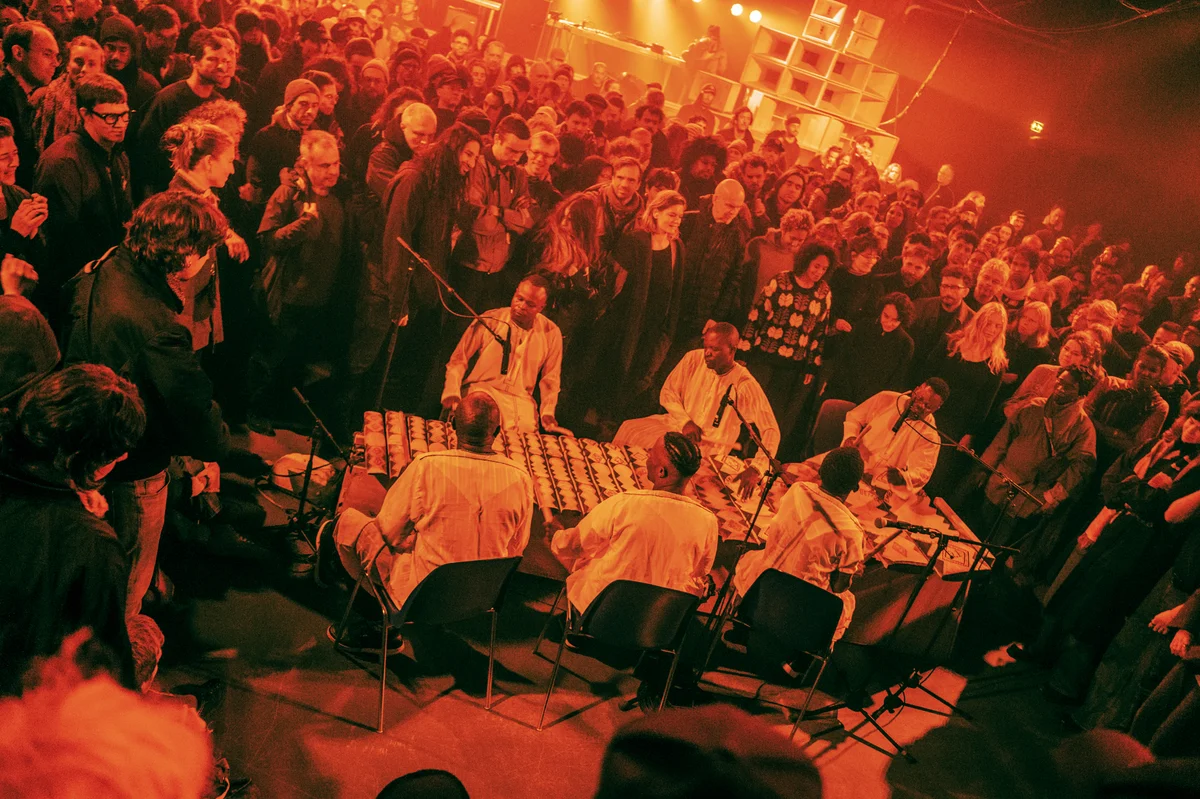
Le Guess Who? gives the room no place to hide
At Le Guess Who? festival, a weekend of testimony, noise and long stretches of stillness argues that being present means taking a side – whether the audience means to or not, writes Kayla Sandiford.
“We wanted to create an equal world for those who don’t have a voice.”
On the opening night of Le Guess Who?, co-founder Bob van Heur is looking back. Now in its twentieth year, the Utrecht multi-venue festival has been celebrated for its forward-thinking curation, bringing over 150 artists to perform across dedicated music venues, theatres, churches, museums, and more in the Dutch city.
When van Heur first launched Le Guess Who? in 2007 alongside co-founder Johan Gijsen, they didn't intend to make a prolonged statement. With Gijsen working as a programmer for Tivoli — an old monastery building that later served as a concert venue before closing in 2014 — and van Heur landing a full-time position as an indie concert promoter with Belmont Bookings, the pair brought a sense of ambition and determination that went beyond putting artists on for gig nights.
At the time, the pair both shared a fascination with Montréal's thriving pop music scene and the creative community built around it. After visiting the annual Pop Montréal’s in Québec, they came away with greater insight into how to organise a large-scale music event, and a vision of the unity they sought to bring back to Utrecht.
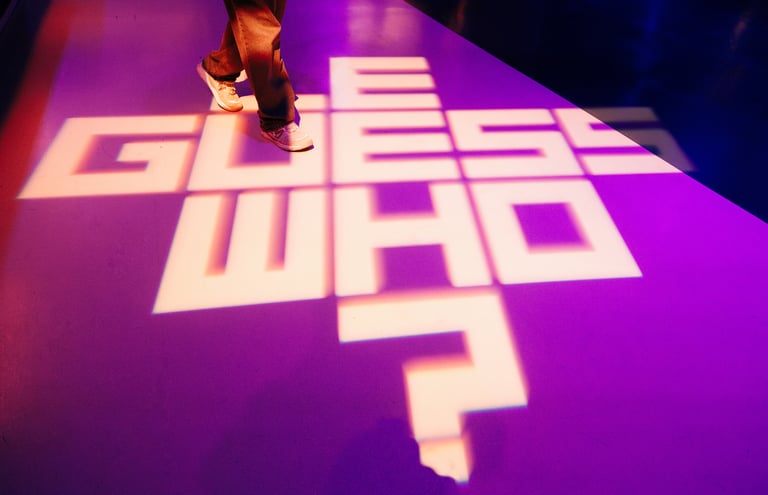
For the first edition of Le Guess Who?, van Heur and Gijsen hosted a two-day event which featured Hot Hot Heat, Mstrkrft, Young Galaxy, Black Mountain, Caribou, Miracle Fortress, and more. “We didn’t expect more than one edition,” van Heur says. But the pair would try it again the following year. And while the leading acts for the Le Guess Who? debut spanned indie rock, pop, and electronic music, the second edition was more overtly advertised as a festival for the “pop underground and beyond”. They even expanded outside of Canadian artists, including Baltimore dream-pop duo Beach House and singer-songwriter Jana Hunter.
Looking at this year’s Le Guess Who? line-up, it’s hard to envision a compartmentalised version of the festival. But after the first two editions, things began to shift. With discovery at the centre of its purpose, van Heur and Gijsen looked beyond the West, inviting artists who explored broad sonic territories with a greater focus on the global underground.
“Initially, we got a no,” van Heur recalls of his and Gijsen’s attempts to push the festival’s boundaries further. “A multi-genre line-up wasn’t logical. But now, it’s the standard.”
This challenged the monolithic mindset of Dutch venues and an overarching fear that the local music scene might become homogeneous. But by continually broadening its own horizons, taking on new ideas from different curators and ultimately reinventing its identity every year while retaining its core ethos of “Listening is the Way Forward”, Le Guess Who? pushes itself to represent a musical community that does not topple into convention.
“Without an artistic vision, I don’t think we can build something of substance that can last for twenty years,” van Heur affirms.
While “Listening is the Way Forward” has always run as the undercurrent of Le Guess Who?, this year, applying it as practice feels especially pertinent. Each element of the programme contributes to a renewed idea of the sentiment, subverting passive listening. The festival’s vision is solidified by positioning audiences to consider who is speaking and where they are speaking from, while indicating the cost of silence.
Four guest curators shape the programme this year, each approaching that question from a different direction. Returning to Le Guess Who? is surrealist blues poet aja monet. As both a performer and curator, she has selected artists who explore resistance, love, and the ultimate quest for joy. Sound artist Joseph Kamaru — aka KMRU — works from field recordings and noise, and brings a durational project of his own, in collaboration with eight performers.
Los Thuthanaka, founded by siblings Chuquimamani-Condori and Joshua Chuquimia Crampton, speak for the Pakajaqi Nation, an Indigenous group from the Andes, through a blend of Andean rhythms, Aymara composition and psychedelic rock, and they have invited artists who translate Indigenous Andean culture into experimental, electronic and psychedelic forms. Tropical Fuck Storm opted for a curation that gets “a little wild with it” gathering their long-time inspirations, friends, artists they have met on the road and acts they have been eager to see live, although the band couldn’t attend the festival themselves due to vocalist and bassist Fiona Kitschin suffering an injury.
At the centre of it all sits TivoliVredenburg, the cultural palace with Grote Zaal, Ronda, Pandora, Cloud Nine and Hertz runing alongside. The festival then spills outward into the city, into the pews of Jacobikerk, the rooms of Museum Speelklok, EKKO, De Helling, dB’s, the theatres, and a warehouse further outside of the city for the festival’s first-ever 24-hour dub programme. The audience travels the same map as a melting pot composed of not only the Dutch, but also international visitors from various corners of the world.

The festival opens on Thursday with poet, journalist and organiser Mohammed El-Kurd in the Grote Zaal. El-Kurd is The Nation’s first Palestine correspondent and an editor-at-large at Mondoweiss, the author of the poetry collection Rifqa, and the 2025 book Perfect Victims and the Politics of Appeal. This is his first time in the Netherlands, and he is accompanied by Los Angeles-based pianist and composer Brian Hargrove.
“For the paper, I write the same article in advance,” El-Kurd recites. “Century old talking points, their timeliness frightening, the ransacking, not routine, relentless. This morning, genocide continues between the river and the sea. Vocabulary is not genocidal, annihilation is. Power imbalance. David against Goliath, not Muhammad against Moses. One nation under surveillance, another in psychosis.”
El-Kurd’s powerful introduction is rattling. It stirs with the exhaustion and impatience of repetition, indicating to the room that nobody gets to arrive here as a bystander.
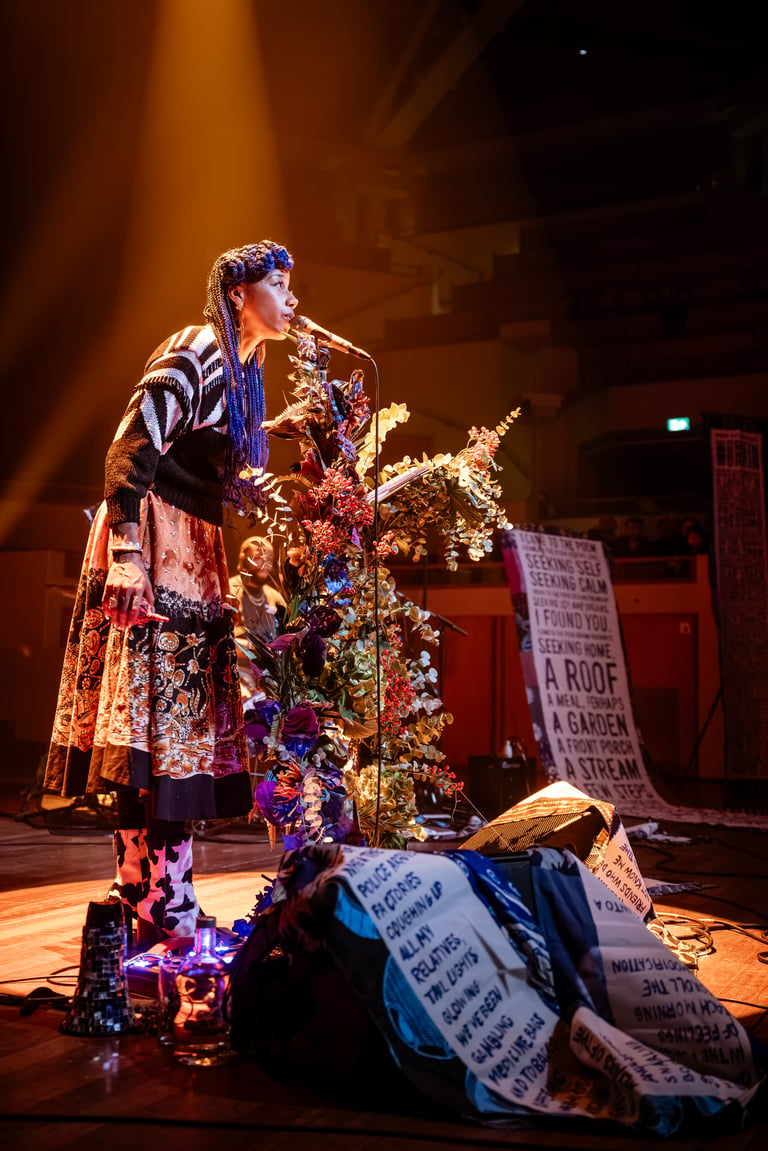
This is further emphasised by monet, who takes the same stage herself later that evening, returning two years after an appearance that she remembers feeling blessed to deliver. During the set, she performs pieces from her album the color of rain, released earlier this year, and she notes that she’s simply letting the poems do what they do: “Say it with your chest,” she urges, “whatever touches your heart”. monet traces moments of connection, contradiction and devastation. But throughout her set, one of the most poignant lines is a pervasive, yet calmly stated reminder: “Silence is a noise too”.
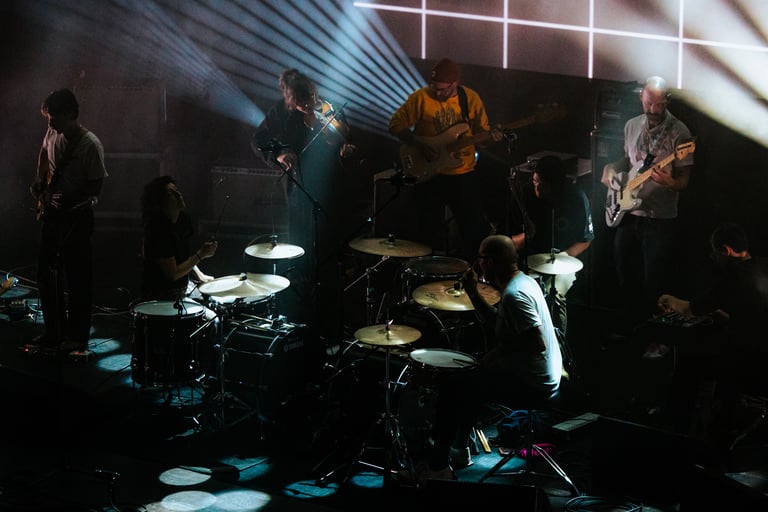
In the Ronda hall, the night thrives on a more invigorating form of repetition. Water Damage, the Austin collective who return after last year’s appearance, present Static Ecstatic, a piece that pushes their ritual swirl of psychedelia and krautrock far beyond any conceivable limits. Over a dozen musicians fill the stage for one winding, continuous composition, and the sound builds from accumulation rather than climax, each player locking into a pattern that no single member could carry alone.
By the time Ugandan percussion ensemble Arsenal Mikebe, joined by experimental musician HHY and the omnipresent percussionist Valentina Magaletti, begin at half past one in the morning, the room has been worn into a different kind of attention. There is a fervent, hypnotic groove to contend with and a compulsion to keep in time as the four artists run organised circles around one another with intricate fills. Watching them play, it seems all-consuming – band members jerk and thrust, issuing sporadic calls into the microphone as Magaletti’s mouth is held in an occasional gape — though everything she should need to say comes through the beat.
I would find monet’s remark of “Silence is a noise too” following me through the weekend like a quiet ripple. It removes the possibility of abstaining. If staying quiet registers as a sound, then every audience member, programmer and institution is already saying something. Le Guess Who? has never invited anyone to admire sound at a remove from its makers. The art is the artist or, for the sake of nuance, an extension or a reflection of them, carrying their beliefs, culture, and methods of cultivating community outward through music, movement and the way they present themselves to the world.
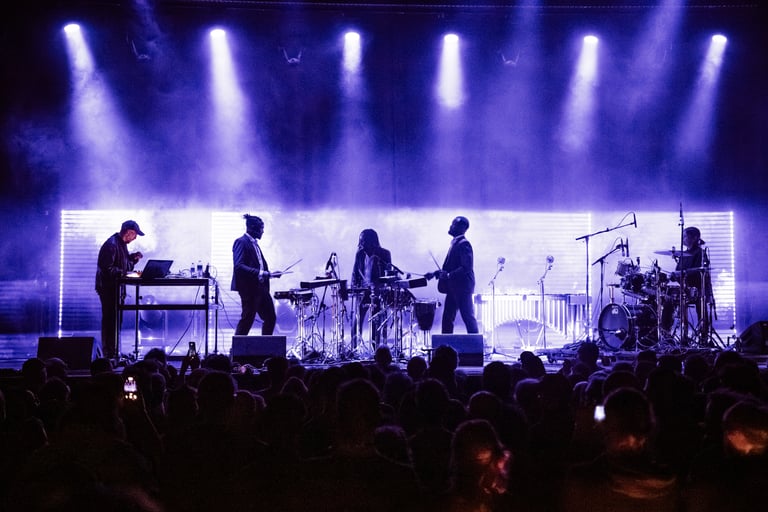
This would become particularly evident on the festival's second day, which belongs to the Sound and Culture Summit, a substantial programme of panels, workshops, listening sessions and performances held at Theater Utrecht. The summit made its debut at the festival last year and returns for a second edition as a staple part of the weekend. Its remit is knowledge exchange on community organising, decolonial practice, music curation and sonic heritage, open to festival visitors and the city’s cultural sector alike.
The programme oscillates between the philosophical and the practical, with panels on diasporic soundscapes and the urgency of intangible cultural heritage, the politics of culture and responsibility in the cultural sector, and on bridging the gap between communities and institutions — sitting alongside workshops on artist visas, deconstructing Ableton and running a label or an online radio station, with a strand of sessions on sound systems and the legacies of resistance in dub.
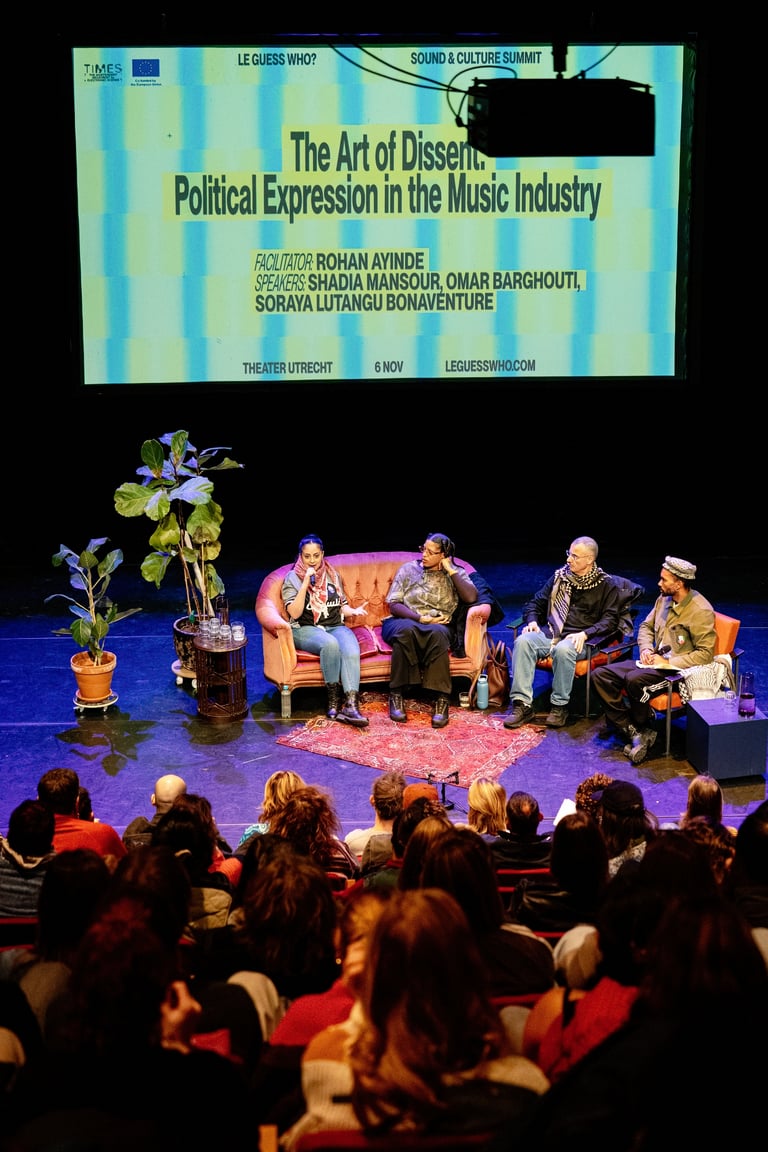
Within that schedule, “The Art of Dissent: Political Expression in the Music Industry” takes the midday slot, moderated by Rohan Ayinde and bringing Omar Barghouti, co-founder of the BDS movement, together with “The First Lady of Arabic Hip Hop” Shadia Mansour and Soraya Lutangu, the Swiss-Congolese producer and performer who releases music as Bonaventure. Placing it at the centre of the day gives the panel a specific job within the summit, which is to ask what the industry that books, funds and sponsors artists owes to the people whose circumstances those artists carry.
Barghouti speaks candidly about the disruption of complicity. “It’s in corporations, institutions, museums, bands, and orchestras,” he remarks. “Trade unions can be complicit through their procurement, what they buy, sponsor and contract. We realise that, in addition to our resistance, we have to work on cutting those links of complicity.”
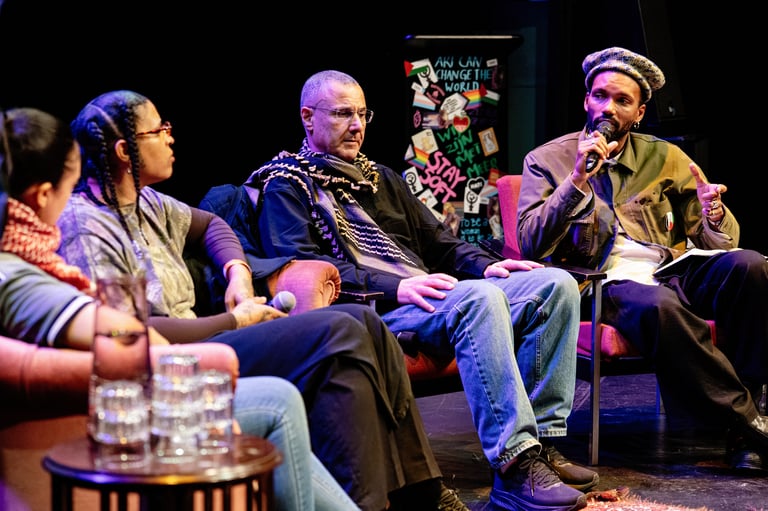
When it comes to the arts sector, the movement has asked cultural institutions to withdraw their involvement since the mid-2000s as an act of opposition to unjust systems. The old objection, Barghouti remarks, was that art sits above politics. His reply is that nothing does: scientists make the same claim for science and philosophers for philosophy, yet an artist always chooses between lending their work to a sponsor’s brand and using it to defend racial, climate or gender justice. “Art is as political as the next issue,” he asserts. “It’s a choice. There is no neutrality in mind.”
What Palestinians ask of the cultural world, Barghouti adds, is modest. “Stop art-washing the regime of settler colonialism apartheid that is destroying our lives.” He gives examples of European festivals platforming Israeli bands that are not opposed to soldiers enacting genocide as a form of complicity, as well as international theatre companies running shows in Israel. “This is the simple ethical issue, which is do no harm,” he says. “If you can’t do any good, at least do no harm. And that applies to the art world.” Set beside monet’s line, this describes silence as a form of participation, and it supports a point the programme makes repeatedly — neutrality belongs to the colonial habit of deciding whose circumstances count as politics and whose count as background whispers.
There was some criticism that the panel contained too little dissent, that there wasn’t anything contesting the shared opinions of the speakers. But it seemed that the expectation of visible disagreement spoke to the model of dissent many audiences carry with them, a version with two positions, a moderator, and a contest. In a summit built around exchange between communities and institutions, this panel offered testimony rather than a debate, delivered by people whose circumstances were not up for adjudication.
Mansour conveys the fatigue of being asked otherwise in noting that Palestinian artists are tired of explaining themselves, that what they ask of institutions is the bare minimum, and that anyone who has watched these years of genocide has seen what she has seen. She describes how a keffiyeh can be read as a symbol of attack, and how speaking Arabic while travelling can invite violence, and she calls it an honour to be invited into a space where Palestinian artists are rarely seen.
Misunderstanding is an inadvertent supplier of neutrality, since an unfamiliar situation makes an even-handed hearing feel like fairness and detachment pass for balance. A festival that gives these perspectives a stage lets them stand openly and steadfastly without first being asked to defend their existence, which seems a more productive form of understanding than a debate would have produced.
Lutangu carries the argument into sound itself. She began making music in 2015 after the death of her nephew Bonaventure, whose name she adopted for her own work, and has since used club rhythms and sampling to confront racism and oppression. Her presence on the panel speaks from practice as well as theory. Speaking about music as a mother tongue, she describes how to build sonic landscapes that heal, appeal and move the body in ways that honour it, with Black people at the centre of that care.
She then plays a song she made to mirror the sound of drones flying overhead. It’s unsettling, and it’s supposed to be, bringing a sense of the threat discussed into the room with the audience that in other contexts could be treated as ambient noise. The session necessitates an empathy that yields constructive action when applied correctly.
“Decolonising the mind is the first step towards doing anything else, and the most potent weapon against the dehumanisation that tells people they may not be fully human, or may not deserve more,” Barghouti says. “Performative action is a luxury nobody can afford, and real revolutionaries do not sloganeer.”
The summit also hosts the Palestinian Sound Archive, whose founder Mo’min Swaitat presents “My beautiful side of the archive” in the afternoon, framing archival practice as a decolonial act. Swaitat built the archive from recovered cassettes and records of music, spoken word and album artwork from historic Palestine, mainly from the 1960s to the 1990s.
That night, Swaitat takes the idea into a foyer DJ set. People pass in and out, some enjoying the dance for a few moments, while others settle there in anticipation of next track. One selection comes from a recording from Swaitat’s uncle’s wedding, inviting the audience to engage with an excerpt from his own personal history. The room shifts with Swaitat’s hand, the foyer turning into a jovial reception that even gets a short dabke line going. Preserving a recording of a family celebration evades silence, erasure, and insists upon recognition of humanity.
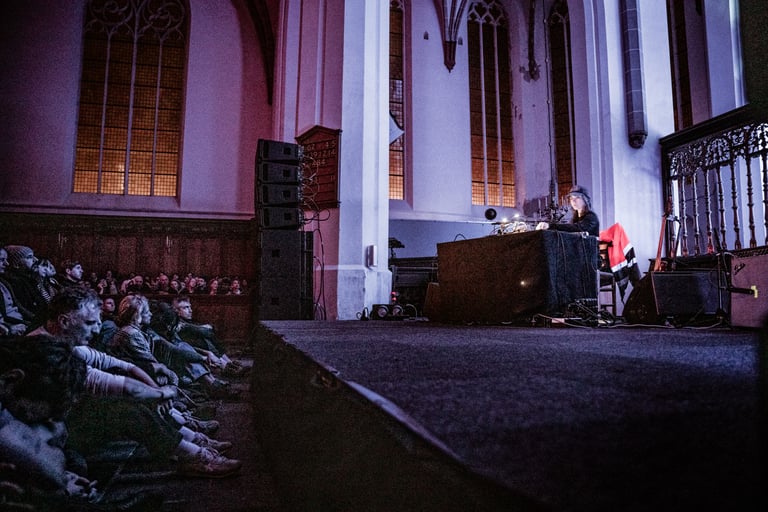
Between those sessions, the afternoon performances are equalisers. Notably, in Jacobikerk, New Zealand composer and guitarist Roy Montgomery and British musician Martha Skye Murphy convene for their first (and probably last) performance of their collaborative album, Nebular, released back in August. Murphy’s voice carries the vocalisation of a wraith, and she writhes with its movement over the grounding hum of Montgomery’s guitar, the sound moving through her like improvisational dance with a transfixing control.
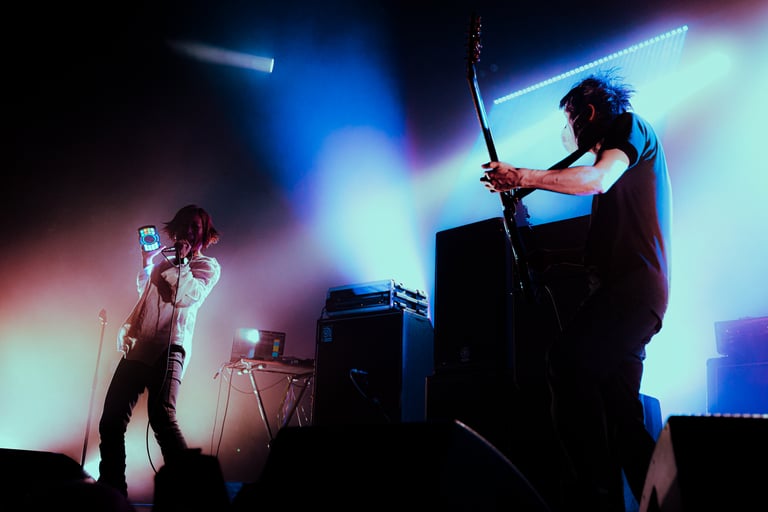
That evening's music is louder and more communal. Melt-Banana, whose hard, experimental mix of punk, hardcore, techno, noise and electronica has no equivalent; the duo are supersonic, commanding a staggered mosh from the audience with their fast, sharp, and brash instrumentation.
In a completely different vein, Khadija Warzazia, the first woman to play Gnawa music in public in Morocco, takes the Pandora stage with the multi-generational percussion ensemble Bnat el Houariyat, who have spent decades preserving and reimagining the houara and shaabi traditions. Their celebratory calls ring out while women dance on the stage in something that feels traditionally ritualistic, an inherited practice carried into a new room.
In Cloud Nine, Polish trio Tercet Imperial dazzle for their debut international show as they reimagine traditional songs through vintage synthesisers and electronic percussion. This includes the oberek, a whirling, hypnotic couples dance from central Poland. The trio note that playing rural repertoire on electronics is as natural a continuation of tradition as it has been for decades in the Balkans, and the festival gives that argument a room to be tested in, which is what a home away from home for experimental artists looks like.
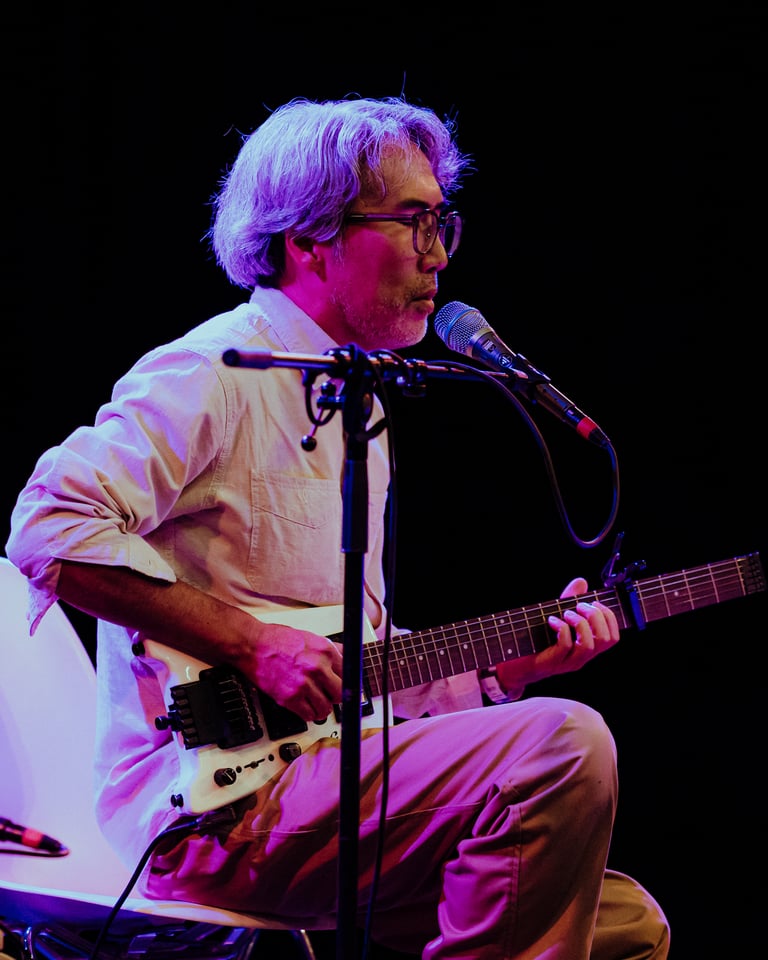
Saturday moves between a theatre, a noise hall and a church. At Theater Kikker in the late afternoon, Posuposu Otani, a prominent figure in the underground scene of Tokyo and Yokohama who now lives among the mountains of Kanagawa, sets the guttural resonance of his throat singing against the delicate twang of an open-tuned guitar. The low hum travels the room in slow waves, and the sound transcends language, dissolving it into overtone and timbre, so the compositions, which draw on nature and the pursuit of freedom, create a sense of nostalgia and familiarity that no translation could supply.
A little later, weed420 delivers a unique barrage of noise in the Pandora hall. It’s a striking and somewhat jolting dichotomy. The experimental outfit is everything at once — noise, lo-fi, maximalist, and vaporwave — but these terms are oversimplifications. In the room, they’re in a league of their own, speaking a musical anti-language that feels like a somatic attack on the senses. And yet, it scratches an unexplainable itch.
By the evening, Grouper are using expansive, slow ambient space to fill Jacobikerk until it feels like being submerged in water, with a siren song audible somewhere in the distance. It’s a slow, meditative cocooning that asks for stillness. The three sets make the case that quiet and loud draw on the same resource, which is the willingness to occupy a room, despite doing so in completely different ways.
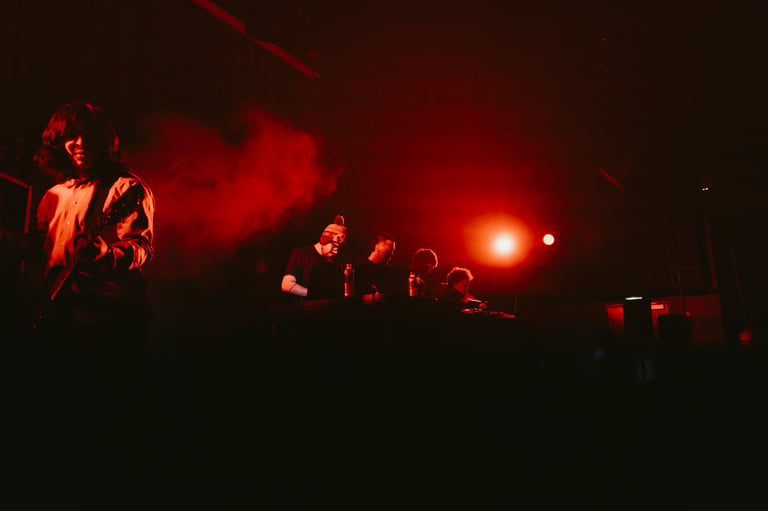
That afternoon, the 24-hour dub also kicks off in a warehouse a little way outside the centre. It opens with Uganda’s Nakibembe Embaire Group, live mixed by Mad Professor, and runs through Scientist performing his 1981 album Scientist Rids the World of the Evil Curse of the Vampires, The Bug vs Ghost Dubs, Aba Shanti-I and Krackfree Soundsystem’s hand-built sound system, to Mutabaruka’s dub poetry on Sunday afternoon.
van Heur says he conceived this programme to change the way dub is perceived. Dub is presented as more than a genre. It is a methodology, a philosophy, and a way of listening, born in the studios and dance halls of Kingston in the 1970s, where bass, echo and space became instruments in their own right. By noon on Sunday, Touching Bass DJs are drawing the room into the second half of the marathon as attendees continue to occupy the space, melting into sways and languid two-steps. With dub, there are no rules, and that ethos unfolds in real time.
By that point, it truly feels like a wind-down day. There are opportunities to lean into the stillness that Saturday offered glimpses of. In Cloud Nine, KMRU’s WAI8 project runs for an eight-hour stretch. It intends to treat waiting as an “active mode of engagement”, rather than a gap before something happens. The project is about suspension, latency and the interactions between presence and absence, in which sound stretches, fractures, loops or dissolves linear time.
Performers Aho Ssan, Carmen Villain, Elvin Brandhi, Koshiro Hino, NEXCYIA, ouri, Samora Ogeda-Chemba Obyerodhyambo, and Whatever The Weather exchange noise, silence, drones, rhythm, voice and waveform between them like folded notes, tapping into the thresholds where sound is barely perceptible to engage listening as a compositional practice. The piece declines climax and resolution in favour of drift, pause and gradual change, and it extends attention beyond the ears to the room and the bodies in it. The audience takes the instruction literally. People sit on the floor to observe, others lie down, and a great calm settles over a hall full of people in no hurry to leave.
The performers build a transportive space in codes that cannot be unravelled, and that resistance to decoding sets the terms of the experience. Nothing is explained, so the room has to attend. I lay down to engage with the performance for what seems like a few moments, but an accidental voice recording reveals that I'm actually in Cloud Nine for forty minutes. Space, as it seems, wills itself to distortion. This is the festival’s motto enacted at length, and it sits close to what monet’s line implies. A silence held with that much care is full of decisions, and the people listening complete it.
The Ronda hall carries the weekend’s final sets. Argentine singer-songwriter Juana Molina opens the afternoon. Accompanied by just a drummer, her own guitar and electronics, she has a masterful control over manipulating her live experimental pop sounds to match the delicate, off-kilter soundscapes of her studio albums. In contrast to Molina’s ambient minimalism, Etran de l’Aïr, the wedding band from Agadez bring maximalist, hypnotic desert blues that charms the crowd with ease. So much so that as they’re guided through the audience to exit the venue, there’s a procession of applause that feels genuinely appreciative.
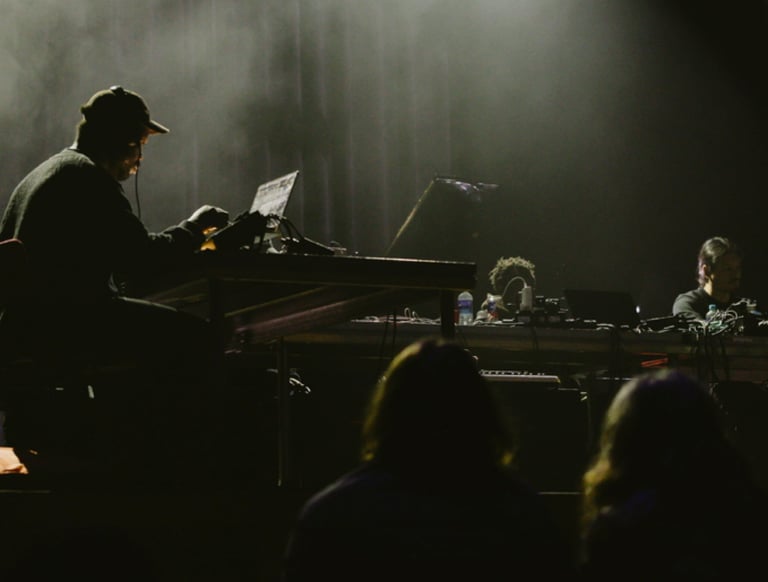
As Le Guess Who? steadily approaches its end, spiritual dub outfit Holy Tongue make a point of leaving their mark in Utrecht. The sounds range from tentative electronic patters to massive, bloated swells that release with a bass-driven pressure, with Magaletti’s meticulous snare patterns serving as a driving force. Guest vocalist Dali de Saint Paul, known for her experimental work, lets the music thrash through her much like a possession, with reverberating shouts filling the room. The audience mirrors her, and as the percussion ramps up, people’s movements are being controlled by something bigger than them.
It sets the tone for Nakibembe Embaire Group to close the festival out later in the night, and the set feels like the destination the whole weekend has been travelling towards. The Ugandan troupe, from the Busoga region, play the embaire, a giant wooden xylophone played by up to six musicians at once, interlocking rhythmic and melodic patterns into music to produce a sense of revelry.
The infectiously exciting sound is unlike anything else at Le Guess Who?, and the compositions feel like the backbone of much of the contemporary dance music that’s appeared across the programme, the pulse and polyrhythm echoing the structures that electronic genres have spent decades rebuilding. It aligns with their collaborations with electronic producers on Nyege Nyege Tapes, and the cohesion of Mad Professor’s live mix as the dub marathon opened on Saturday. As they initiate a call and response with the audience and the room answers, stage and floor become one conversation. There is no space for silence here, and certainly no space for neutrality — not when everyone so effortlessly meshes together as a unified whole.
Although van Heur and Gijsen didn’t intend to make any major statements with Le Guess Who? twenty years ago, the festival is louder than ever. It no longer has to justify its identity, and now sets a standard for what a forward-thinking festival should be. Where the co-founders set out to give underrepresented voices a platform, they’ve demonstrated that this can go beyond performative action and into consistent, applied programming. One of their goals was also to offer a “home away from home” for artists to experiment with ease, and here, those who have been silenced are given ample space and access to do so, without having to defend their right to it.
Le Guess Who? does not exist with a pretence of neutrality. Rather, it moves with deliberate care and encourages audiences to engage just as fully, whether moshing in a crowd, listening to a testimony, lying on a hall floor, or responding to a call from the stage. It’s through this standard for accountability that twenty years on, Le Guess Who? Festival proves that it’s conviction, not compromise, that lasts.
Find out more at leguesswho.com
Sign up to Best Fit's Substack for regular dispatches from the world of pop culture